
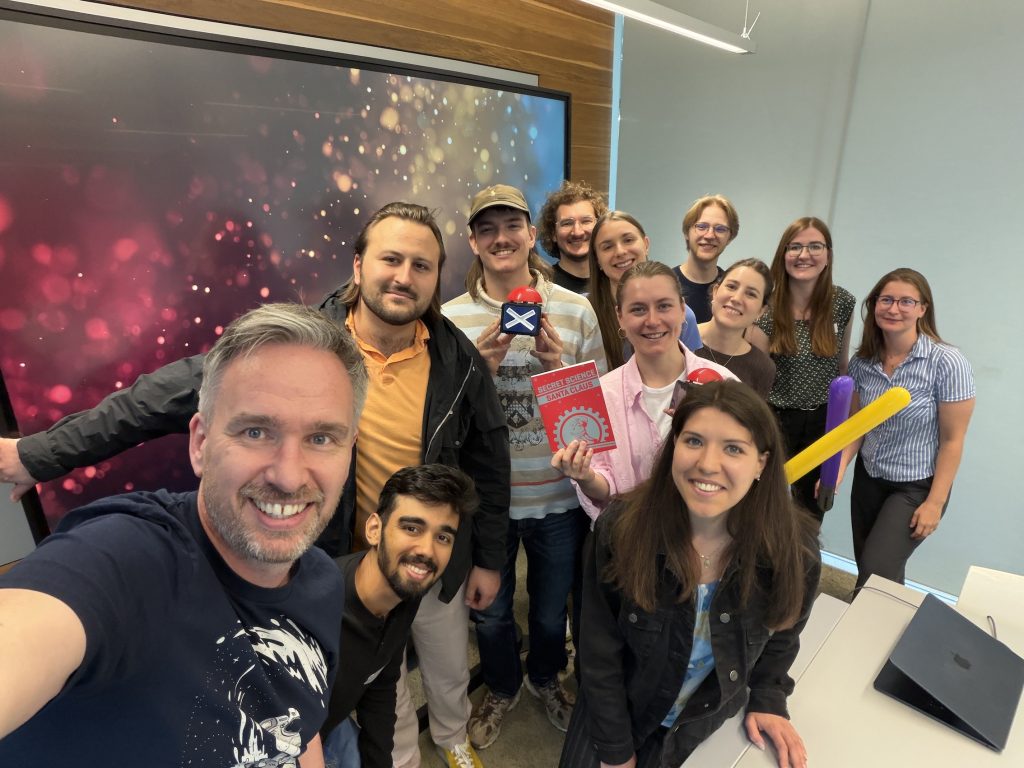
Eleven early-career researchers explore ‘Effective Poster Design and Presentation’
In the career of a young academic, scientific posters is one of the big three ways to share research results, the other two being presenting on stage and of course writing scientific papers.
Most scientific conferences include poster sessions, and I attended quite a few during my PhD and postdoc careers. When creating my past posters , one thing that I lacked was a set of clear guidelines on how to design an impactful posters, rather than it being a case of just doing what everyone was doing in the world of poster design.
Over the past three years or so, I’ve been delivering online poster training sessions for PhD and Postdoc researchers in the Netherlands. The impact of these sessions has been immediate, as demonstrated by the evolving and memorable posters at the M2i (Materials innovation institute) conference which takes place every year in December.
However, I wanted to take my poster design workshop to the next level. I pitched my one-and-a-half day workshop ‘Effective Poster Design and Presentation’ to ProTrainU – the Graduate and Professional Training Center at Ulm University in Germany. They loved the workshop proposal, and in June this year, I delivered the workshop to eleven early-career researchers. And it was a lot of fun!
Day 1: Principles of Effective Poster Design and Making a Poster

After a light-hearted introduction involving some fun facts about attendees and spontaneous pitching, I introduced the group to poster storytelling and the principles of effective poster design. I shared some of my poster failures – the posters that I shared as a researcher that I wish I had never shared. In addition, I featured some of their posters in the workshop and made suggestions about ways to enhance the posters while also highlighting the positive aspects of their posters for everyone. In addition, I discussed best practice with regards to presenting a poster during a poster session.

In the afternoon, the group then took the lessons from the morning and put them into action. Some redesigned previous posters while others created brand new posters from scratch. Throughout this part of the afternoon I was available to provide advice and assistance when it came to design or result choices for their posters. At the end of the day, the group had created eleven new posters, which were whisked off to be printed for the next morning.
Day 2: An informal poster session

On the morning of the second day, after a short energising moment, the group were thrust straight into poster presenting mode. Over the course of just over one hour, the researchers pitched their posters to each other and then answered questions from their fellow researchers. Time was tight for the researchers as they had just five minutes to pitch their posters and to answer questions. The poster session was designed to simulate a poster session at a conference. All posters were displayed at poster boards similar to those at a scientific conference.

In addition, the researchers also graded each other’s posters, while a jury provided by ProTrainU also assessed the posters. At the end of the poster session, the participants were given personalised feedback on their poster designs and also on some of their poster pitches. The two overall winners from the poster session were Sina Beck (who was the winner selected by the participants) and Gerrit Herrmann (who was the winner selected by the ProTrainU jury).
Poster fun and lessons learned

This was my second trip to Ulm University after being part of the ProTrainU Science Day in October 2024. As with my first trip, it was a memorable visit to the university. Over the course of the two days my goal was to create a fun environment for constructive discussion and learnings on poster designs. Those who attended helped to elevate the workshop – they are ones who brought the past posters, the research, and the ideas. My workshop acted as a way to funnel those ideas and presented some of the key considerations for poster design.
There were also a lot of lessons learned on my part for the next iteration of this two-day workshop. The researchers provided me with a lot of valuable feedback on how the structure and timing of the workshop could be adjusted to maximise the experience for them.
I’ll use the feedback from the researchers to enhance the next iteration, which I hope will be delivered to researchers somewhere sooner rather than later.
Interested in a poster design/presenting workshop?
If you’re interested in a dedicated poster design/presenting workshop for the researchers in your group, department, or institute, you can reach me at barry@bwscience.com.